If you take what Eurostar has said in its press release, Alstom has said in its press release, and what has appeared in the FT and The Guardian among others yesterday, you end up with the impression that these Avelia Horizon double deck trains Eurostar is to order from Alstom are going to be everything to everyone. But not everything said about all of this can be true – because some of it contradicts.
So let’s break this all down using the numbers and what we know about Eurostar’s fleet, and see where that leads us.
I will start with only some basic facts from what was announced: that SNCF Voyageurs, for Eurostar, is going to order 30 Avelia Horizon double deck trains, and the first of these will run by 2031. After the initial 30, there is an option to order 20 more. These trains – in common with orders of this type for TGV services – will be c. 200m long, with a power car at each end and 9 carriages in between. And I will work with the assumption that Eurostar wants to increase the capacity of the routes it will run (so it will not replace existing trains with smaller or lower capacity ones).
The length here is important. Trains c. 200m long can be coupled together to run as a 400m double unit. Anything where an individual unit is longer than 200m cannot be used as anything other than a single unit, as platforms at Paris Gare du Nord and Bruxelles Midi can accommodate maximum 400m long trains.
This is the fleet Eurostar currently has for Channel Tunnel services:
| Type | Built | Length | Seats | Sets in service | Can run in |
| Class 373 (also known as TMST or e300) | 1992-1996 | 394m | 758 | 8 | UK, FR, BE |
| Class 374 (also known as e320 or Siemens Velaro) | 2011-2018 | 398.8m | 902 | 17 | UK, FR, BE, NL* |
So that amounts to 25 400m long trains.
And Eurostar’s ex-Thalys trains for services in continental Europe:
| Type | Built | Length | Seats | Sets in service | Can run in |
| PBA | 1993-1996 | 200m | 377 | 9 | FR, BE, NL |
| PBKA | 1995-1998 | 200m | 401** | 17 | FR, BE, NL, DE |
So that amounts to 13 400m trains equivalent.
And then the new trains Eurostar is to order:
| Type | Built | Length | Seats | Sets on order | Can run in |
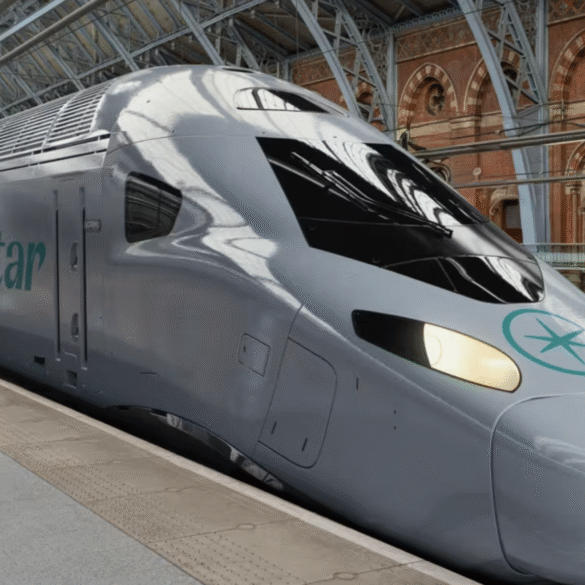
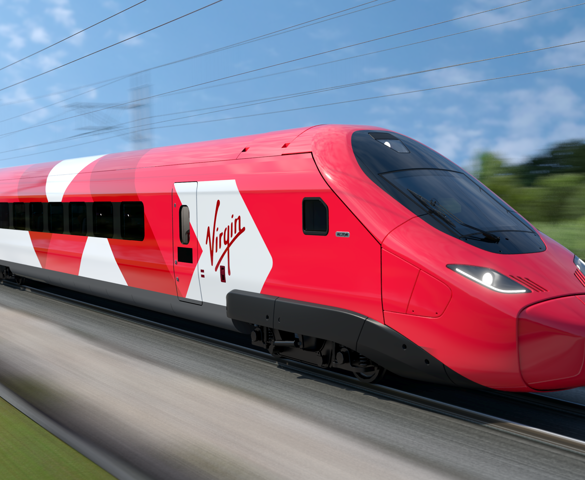
| Avelia Horizon | 2026 onwards | 202m | 540*** | 30 (option for 20 more) | UK, FR, BE, NL, DE |
That amounts to 15 400m trains equivalent.
Given that all of Eurostar’s 373s, PBAs and PBKAs will be more than 30 years old by 2031 when the first Avelia Horizon will be delivered, and 30 years is the expected life of a high speed train, Eurostar ideally needs to replace all of these old trains. Only the Siemens 374s do not need an imminent replacement.
But you need 2 Avelia Horizons to replace 1 373. So you need 16 Avelia Horizons to replace the 373s, and 26 to replace the PBAs and PBKAs. So 42 Avelia Horizon trains for a complete replacement of the whole of the old fleet.
And Eurostar has ordered 30 Avelia Horizon, with an option for 20 more.
So the 30 trains Eurostar has committed to ordering from Alstom is too few to replace its entire old fleet.
So what is Eurostar going to do with just 30 trains?
Theory 1 – Replace only PBAs and PBKAs with Avelia Horizons
Replacing the existing 26 200m long trains with a fleet of 30 200m long trains looks like the simplest fit. All of the ex-Thalys routes are based on a 200m long train model at the moment, with trains often being coupled and uncoupled at Bruxelles Midi. Eurostar has never even operated a 2x 200m formation between Bruxelles and Köln, although it can between Amsterdam and Paris. Plus there are no known headaches with regard to approval of Avelia Horizon double deck trains on ex-Thalys routes in continental Europe, although the big step down into a Avelia Horizon designed for 55cm platforms at the 76cm platforms in Belgium and Netherlands could be a minor inconvenience.
The main downside to this outcome is the new trains would not be used to London at all, but given the potential headaches with the Channel Tunnel evacuation rules for a train without a continuous corridor throughout, and questionable door placement, this outcome strikes me as the most likely one.
Theory 2 – Replace PBAs and 373s with Avelia Horizons
Eurostar is still refurbishing its PBKA trains, but no such refurbishment for the PBA trains is foreseen. Eurostar would need 16 Avelia Horizon trains to replace the 8 373s, and 9 to replace the PBAs – 25 trains, and they have ordered 30.
This however is going to result in a rather complicated rolling stock situation, with Avelia Horizon operating some London – Paris trains (I presume, due to higher capacity than other trains), and 374s the rest to London, and some Paris – Bruxelles – Amsterdam and maybe even Paris – Bruxelles – Köln trains being run with Avelia Horizon too. But given one Avelia Horizon coupled with one PBKA will not work, that is going to result in some very complicated stock deployment on ex-Thalys lines.
Plus this outcome would mean Avelia Horizon would have to be OKed to run through the Channel Tunnel from the start.
Theory 3 – Replace PBAs and 373s with Avelia Horizons, and redeploy as many 374s as possible to Continental Europe routes
Eurostar could theoretically deploy all 30 Avelia Horizon trains on London routes, and move some of the Siemens 374s onto Continental European routes. But 374s cannot run to Germany, as they lack 15kV electrification to run there. So you would end up with a mix of Avelia Horizon and 374s on London routes, a mix of 374s and PBKAs on Paris – Bruxelles – Amsterdam, and PBKAs only on Paris – Bruxelles – Köln. That ends up with an outcome even messier than Theory 2 above.
Theory 4 – Replace PBAs, PBKAs and 373s with 30 Avelia Horizons (the Malevolent Eurostar theory)
I had sort of considered this idea initially, but considered it too extreme. But some prompting on Bluesky pushed me to add it. SNCF – with its TGV fleet – has pursued an aggressive reduction in its number of trains in recent years, so why not do the same to Eurostar?
Look at the seat numbers, instead of the number of trains, and you need 12 Avelia Horizons for the same seat capacity as 8 373s, and 19 Avelia Horizons for the same seat capacity as all the PBAs and PBKAs. So 31 trains total. Use 30 trains a little more efficiently than the 31 currently, and bingo, you’re covered.
The problem with this one is it would need a complete change in the service pattern, particularly for ex-Thalys routes, where you would have to abandon some departures altogether as you would not have enough units to cover all the existing slots. And you might have to also run single 200m sets to London. And Eurostar has – over and over – stated that it aims to carry 30 million passengers by 2030. There is no way you can increase passengers with a fleet that would be this small. So I cannot see this one being the one pursued. And route expansions to Geneva, Frankfurt etc. would simply not be possible.
Conclusion
The most obvious way for Eurostar to deploy 30 Avelia Horizon trains is to replace the entire ex-Thalys PBA and PBKA fleet. Any attempt to deploy the new trains to London from day one results in a much more complicated rolling stock situation, with a mix of three types of trains incompatible with each other to be used across all the routes.
If Eurostar ever orders the 20 additional 200m Avelia Horizon trains, those would then most obviously replace the 8 400m long 373 trains (as 16 Avelia Horizons are needed to replace 8 373s).
And the 8 “extra” Avelia Horizon trains (from 26 to 30 in the first tranche, from 16 to 20 in the second tranche) then would be used for route expansion.
* – Siemens class 374 Eurostar trains have a provision to be upgraded to allow them to run in Germany. But given no German station you can serve from London has a 400m secure platform I cannot see why Eurostar would re-equip the 374s
** – assuming all Thalys PBKA receive the “Ruby” renovation
*** – there is a slight oddity here, in that Eurostar’s Avelia Horizon trains are to have only 540 seats. SNCF’s TGV-M is to have around 600 seats in a 2 class, 200m long formation (although I cannot currently find a confirmed final number). I presume this is due to Eurostar wanting more, or more deluxe, first class, and more space for catering on board? But 60 seats per set fewer is a lot!
[Update 24 October, 14:00]
Added theory 4, and a few extra lines about class 374 to Germany, and Eurostar capacity of its Avelia Horizon.
[Update 30 October, 09:00]
ORR has today decided that Virgin Trains should have access to Temple Mills, but there is an interesting paragraph in the decision (PDF here) about Eurostar’s train order:
30. We consider that EIL’s firm plans (that is, the Phase 1 service step up and the procurement of its replacement fleet of 30 trains) will offer lower economic and social benefits than any of the applicants as EIL’s Phase 1 plans only entail a maximum of 15 additional services a day by 2035. EIL’s wider plans, which include an option to buy 20 further trains and extend services to new destinations such as Frankfurt and Geneva, are not included in the forecasts it submitted.
My emphasis. So the extra 20 Avelia Horizon trains are so sketchy so as to mean ORR did not even consider those ideas when making their decision.
[Update 30 October, 17:40]
General Secretary of Eurostar Gareth Williams was on this week’s Green Signals, recorded before the ORR Temple Mills decision, talking about Eurostar’s double deck fleet – and he explicitly states (about 4 mins in) the Class 373 TMST trains are to be the first to be replaced. So Theory 2. Something really does not add up here. The question is what?

Thanks Jon, informative post. Going purely on the idea that they’ll replace the oldest trains, why isn’t theory 2 most likely, with the 20 follow-ups being PBKA replacements? I suppose it hangs on how amendable the channel evacuation rules are?
Yes, exactly. And theory 2 leaves them with rolling stock that’s very complicated to deploy.
What about thinking in number of seats?
Replacing 8*758+9*377+17*401 needs 16274 seats
30 TGVM at 540 seats is a total of 16200, with 543 seats the total is 16290
With 30 trains Eurostar replaces the current capacity.
You can do arithmetic, well done. The problem is with fewer trains but trains with more seats in them you have to change your timetable around. Plus Eurostar *says* it wants to up its annual passenger numbers. So perhaps it doesn’t, and perhaps it’d be fine running fewer trains with more seats in them, but I still can’t see it. Sorry!
It doesn’t necessarily mean running fewer trains, some sets can be “saved” by running single between Paris and Brussels or Amsterdam instead of double. However I haven’t calculated if it would be enough (perhaps also an increase in productivity is hoped).
Heard long time ago that double deckers cant be used in Eurotunnel because
1) Passengers should be able to traverse the full lenght of 400m through the train to reach an emergency exit which you clearlz cant with a double decker tgv m with two locomotives in the middle
2)evacuaion of passengers in wheelchairs in the lower level
also, 540 pax is kinda low for a tgv M, they have 630 pax in Inoui config and 740 in Ouigo so how come?
great post as always
Roughly, but not quite.
You can overcome the not being able to get right through if *either* you can evacuate the front unit into one evacuation passage, and the back unit into another one. And for this you might have to find a way to de-couple units, which would present its own problems. But at least in theory you could overcome it.
And then regarding the wheelchairs, if these were at the doors where the evacuation passages would be, then you can evacuate there. Again, theoretically possible.
But *in practice* making it work could be complex.
And 540 seats – yes, I wondered that, but that’s what they say. Could there be a need for a more fundamental reconfiguration somehow? But I have no answer to that point. But thanks for reminding me of it – I will add a line on it in the post.
Btw since reading this comment I have tried to come up with an answer what the definitive seating capacity in a inOui configured TGV-M is, and I can find no number. But given SNCF claims 15-20% higher capacity than an existing Duplex, and assuming 5 2nd class, 1 bistro, and 3 1st class carriages, it must be in the 600-620 range I think.
So why then is Eurostar’s fleet to have only 540…?
It’s strange.
If you consider the amount of luggage Eurostar passengers usually carry and the lack of substantial overhead storage inside the Duplex units compared to single floor high-speed trains, a far greater amount of real estate will have to be allocated to baggage storage in lieu of seating capacity in order to afford clients the same luggage allowance as on their single floor units.
Add catering facilities, trolley lifts, bike storage, perhaps the introduction of a Frecciarossa type Executive class and the 540 seats don’t seem that far-fetched.
Perhaps the number of carriages? TGV M can be changed between 7, 8 or 9 carriages. French Wikipedia: https://fr.wikipedia.org/wiki/Avelia_Horizon If SNCF claims the capacity can be higher, that could, at least partly be, because they want to use the 9 voiture configuration. For Eurostar that’s a no, because in that case a double set wouldn’t fit in Paris Gare du Nord.
No. Eurostar said its Avelia will be the 9 carriage 200m version, not shorter. Ok, maybe this isn’t true (as plenty of things they say don’t add up). But I can’t see why they’d go for less than 200m. And note: a TGV Duplex is 200m 8 carriages, an Avelia has shorter power cars so is 200m 9 carriages.
Since the introduction of the first TGV almost 50 years ago, the lengths have always been 22.2 m for a motorcar, 21.85 m for an end carriage (adjacent to the motorcar) and 18.7 m for an intermediate carriage, both for single and double deck stock. There must be very good reasons for Alstom to make carriages shorter. That costs valuable commercial space. So I assume the Avelia carriages have the same lengths.
A nine carriage train without motorcars is already 175 m long. That leaves 27 m for the two motorcars together to fit in 202 m. The motorcars can each be only 13.5 m long. That’s almost 9 m less than of a traditional TGV. It can also be calculated another way. An extra 18.7 m intermediate carriage with the train only getting 2 m longer, means that the motorcars together must be about 17 m shorter, or about 8.5 m each. I have doubts that’s true.
If I suppose the Eurostar ordered Avelia has the same number of axles as a 9 carriage train, but is composed of eight carriages, two end carriages adjacent to the motorcars, four intermediate carriages and two “end” carriages in the middle of the train to make easy uncoupling possible in the Channel tunnel, then the train without motorcars becomes 162 m, six m longer than with a normal 8 carriage train. If the motorcars are 20 m, about two meter shorter than a traditional TGV, the total is 202 m. This is a type of composition I can believe.
Kindly, do some more research on the Avelia Horizon / TGV-M. The *whole point* of the new design is the motor cars are each more than 2m shorter than TGVs of the past, and each trailer 1m shorter. That means you can have 2 power cars, and 9 trailers, and a 202m length.
What about Eurostar indeed reducing its services. Now that the ECD is running it may see reduced demand for Amsterdam – Brussel, and with DB expanding on Köln – Brussels they may even abandon that altogether.
I suppose it is possible. But Eurostar has been saying over and over it aims to expand. I still cannot (quite) imagine it actually wants to do the opposite.
Theory 4 sounds sceptical but it makes economic sense for Eurostar’s largest shareholder – (ultimately) the French government. If we look at the reason behind the aggressive reduction in the number of TGVs, we will know why this is the French state will not hesitate to do the same to Eurostar, which is another fat cash cow.
In France, the government has been doing everything to squeeze all profit out of the SNCF and use it to replace old regional train tracks so as to avoid any further spending commitments on rail out of the government coffers. The SNCF is obliged by the government to make a certain amount of profit every year and pay dividends to its sole shareholder. As a result, instead of buying more trains and capturing the lucrative west coast market, they have to shrink their fleet and reduce services, leaving the low-hanging fruit to future competitors.
In the article, you rightly say it wouldn’t make operational or logistical sense. However, Eurostar, a supposedly European semi-public service, has become a French political problem. It has to serve its French shareholders before caring about passengers.
Also, this theory makes sense for Eurostar’s intention to keep its monopoly as long as they can. As you have pointed out in the article, for the London routes, they can optimise the timetable to run more shorter 200m sets more frequently to somehow keep roughly the same capacity. If they exercise their option to get 20 more trains and fill up the Channel Tunnel with short trains (whilst keeping the long Siemens trains), this might be a bad faith play to use up all the time slots to keep other competitors away. Would the ORR let this happen though? (Probably yes given the capacity problem at Temple Mills??)
I wonder why the PBA trains have fewer seats and have not yet been modernised with Ruby… I find the PBKA very cramped after the last modernisation… Okay…
Would it not be possible to convert the Avelia with two powered carriages? Then a 400 m train would actually be possible… The SNCF considered this years ago with the Duplex…
The ORR will decide on Temple Mills by 31 October, although I still don’t quite understand why they don’t just expand the plant and create additional capacity… It seems to be a huge political issue…
Have a nice subdqy!
sorry, I meant have a nice sunday and thank you for the answer.
My guess is a variation of Theory 2. Let’s check the current situation.
On the ex-Thalys routes:
Brussel-Paris is now almost always two sets of 200 m, that makes 400 m.
Amsterdam-Brussel is now most of the time one set of 200 m, although sometimes two and I believe this is gradually happening more often. That one set is almost always coupled in Brussel Zuid to another set to go to Paris together.
Köln-Brussel is always one set of 200 m. That one set is almost always coupled in Brussel Zuid to another set to go to Paris together.
On the original Eurostar routes:
Paris-London is now always one set of 400 m.
Brussel-London is now always one set of 400 m.
Amsterdam-Brussel is now always one set of 400 m. BUT in the direction of London only the rear half of this train is used. The front half runs empty. I don’t know the situation in Amsterdam, but in Rotterdam the same platform is also used by other trains, mainly ex-Thalys to Paris. On that platform the “rear” part is temporary fenced off if a train to London is scheduled. The “front” part remains accessible to everybody. Passengers access the “rear” part from security check area in the station building and then board the Eurostar. On the moment the Eurostar departs, the security guards remove the fence and the platform is fully available for the next train.
Running a train of which half of the seats are not allowed to be sold must be horror for the commercial department. It looks to me that Eurostar prefers for Amsterdam-London the same as for Amsterdam-Paris: one 200 m set that in Brussel Zuid couples with another. The same for the intended trains from the direction from Köln to London.
Class 374 makes 49% of the current total seat capacity. The seat capacity of the 30 Avelia ordered equals that of the total of the existing class 373 (19%), PBA (11%) and PBKA (22%). If Eurostar wants to expand, and they say they want, then those 30 Avelia are not enough if all class 373 and PB(K)A are withdrawn.
My guess is that the Avelia will be used at first on Amsterdam-Brussel-London and Amsterdam-Brussel-Paris. Avelia instead of PB(K)A means that less often a double set is needed between Amsterdam and Brussel. In Brussel the set from Amsterdam is most of the time coupled to another Avelia for the trip to Paris or London.
Class 373 to be withdrawn. Paris-London (almost) only class 374 and class 374 limited to that route and some London trains that start in Brussel.
PBA to be withdrawn. PBKA on Köln-Brussel-Paris. The Brussel-Paris only trains a mixture of PBKA and Avelia, but about the time the option of 20 is excercised and delivered, the PBKA’s will be withdrawn.
By the time Germany copies the Amsterdam/Rotterdam security process and trains can go direct to London, Avelia are to be used also on Germany-Brussel-London.
There will be a long period that Avelia and PBKA will share the routes, except for London, but that’s inevitable when replacing a large fleet. On the moment the first 30 Avelia are in service and the PBKA not yet withdrawn, the capacity will be 21% higher compared to the current situation. If the 20 optional Avelia are added and the PBKA withdrawn, this is 34%. The number of train-sets will go from 51 now via 64 to 67. Reasonable figures for a company with growing intention. I guess in the final situation class 374 with then 36% of total the seat capacity will mainly/only be on Paris-London, while Avelia with 64% of the total seat capacity will do all the other routes.
Amsterdam: 600 can board
Rotterdam: 165
And the rest you fill in Brussels. So nothing runs half empty to London.
Ok, my data and own observation about an over half empty (no passengers in the “front” part) and delayed class 374 departing from Rotterdam are from July 2023. I was waiting for the Thalys on the “front” part of the platform. It can be outdated since the changes in Amsterdam.
But even if the “Dutch” contingent is almost sold out, then there are still about 150 systematically empty seats. At the same time there will be on that apparently popular train only about 150 seats available for people boarding in Brussel. And Eurostar should start selling tickets from Brussel for that train only long after they opened selling of tickets from Amsterdam and Rotterdam. Otherwise many seats will already be sold to passengers boarding in Brussel before they could be sold to people who want to board in Amsterdam or Rotterdam. That would mean half empty trains between Holland and Brussel. It seems to me that Eurostar, like SNCF, wants maximal occupation of their trains for the whole route. It makes sense, it’s the best use of their capacity.
The only reason class 374 now goes to/from Amsterdam is because it’s the only type allowed in both the Channel tunnel / UK and Holland.
Coupling in Brussel an Avelia from Amsterdam or Germany with another for passengers boarding in Brussel is the best method to limit the amount of empty seats on part of the trip. It’s what Eurostar does now with the PB(K)A. There are only a few passengers from Amsterdam and Rotterdam that go off in Antwerpen or Brussel. Most have Paris as destination. A well occupied train from Holland is coupled with one that accommodates people boarding in Brussel. For London bound trains all passengers boarding in Holland will go to the UK, nobody gets off before leaving a seat for somebody boarding in Brussel.
I stay with my conclusion. Eurostar likely wants 400 m trains between the three main destinations Paris, London and Brussel, and 200 m trains north and east of Brussel. Then the basic is class 374 between Paris and London and Avelia to, from or via Brussel.
Reading (a week late) your very thoughtful post made me think that “working what Eurostar is going to do” is possibly also a question of Eurostar’s internal organization, on top of the the numbers you provide here and on its political priorities you outline elsewhere. That is, that at some point some executives think about “what kind of company do I want to run” whereas from the outside we mainly think about “what kind of services and products can this company provide us.” So, is post-merger Eurostar internally still a very divided organization? One way to think of your option 1 is that it has been divided and its executives want it to continue to be so, your options 2–4 suggest an executive team that has inherited two organizations and have ambitions to forge one bigger, mixed one. (Keeping in mind your previous post that Eurostar seems to lack ambition!) Maybe I’m overthinking it, but an org-chart reshuffle might be another source of hints beyond their PR.
I still believe the most in “theory 5” :
Eurostar has always said since the launch of the tender they want 50 sets ; the 30 + 20 options is a financial choice as it means less to pay immediately (and they are still repaying the debt).
So they will get the 30 firm orders temporarily deployed as in scenario 2, and continue on to replace all older trains and expand services.
SNCF aggressively reducing its fleet is old news from 2016-2021. Since 2022 and the spectacular return of traffic growth no TGV has been removed and they plan to extend the life of the early Duplex (and the remaining Atlantique and Réseau for a shorter period as their structural end of life is near) so the TGV M will partly extend the fleet (at last !).
(it’s still unclear what will happen to the services to Belgium but it’s another problem).
Regarding the statement of Gareth Williams: Green Signals replied to a comment on YouTube saying they understood it as the e300 + PBA + PBKA fleets being replaced by the 30 Avelia Horizons i.e. Theory 4.
Do you mean the comment:
@Abisanth11
1 day ago
4:41 So are they planning to replace the e300, PBA and PBKA fleets with only 30 Avelia Horizons or does that also include the option for 20 additional trains i.e. 50 trains in total?
And the Green Signals reply to that?
Unless Richard has some information that I am not privy to, I am not sure they can really answer that with any precision any more than I can!